
Minister Miller tours local businesses that are participating in pilot program
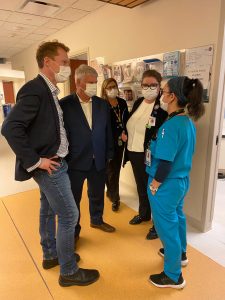
Minister Miller and MP Sheehan meet with Nurse Hazel, a RNIP participant from the Philippines, at Sault Area Hospital
Rural and Francophone minority communities are critical to Canada’s long-term growth, and regional immigration plays a key role in strengthening their economies. In particular, the Rural and Northern Immigration Pilot (RNIP) has been successful in connecting businesses and employers in remote communities with the skilled newcomers they need to thrive.
That is why today, local MP Terry Sheehan and the Hon. Marc Miller, Minister of Immigration, Refugees and Citizenship, met with local officials and toured businesses in Sault Ste. Marie that have participated in the pilot, including Tenaris, Heliene, JD Aero, and the Sault Area Hospital. The federal government has announced new pilots for rural and Francophone minority communities, as Immigration, Refugees and Citizenship Canada (IRCC) continues work toward creating a permanent rural immigration program.
“Rural and northern communities face unique economic and demographic challenges. However, through the RNIP, rural communities have been able to attract and retain skilled workers that they’ve needed for years to ensure their economic growth," said Miller. "That is why we will make RNIP a permanent program, and why we are introducing these two new pilot programs. We’ll continue to work closely with these communities, as we work to connect businesses with the skilled workers they need to thrive.”
In 2019, MP Terry Sheehan joined then-immigration minister Ahmed Hussen in Sault Ste. Marie to announce the eleven pilot communities for the RNIP program. The pilot has proven popular with large and small businesses in its host communities, and the government will now work to establish it as a permanent program. While the government works to make it permanent, the Rural Community Immigration Pilot and the Francophone Community Immigration Pilot will be launched.
The Rural Community Immigration Pilot will launch in the fall of 2024. It aims to ensure that rural communities continue to have the ability to access programs that address labour shortages and help local businesses find the workers they need. It will provide pathways to permanent residence for newcomers who can help to overcome critical labour job shortages and want to live long term in these smaller communities.
“I am pleased that our government is continuing to see the importance of the Rural and Northern Immigration program, and that it is now expanding pilot programs to more rural and francophone communities. Since we launched the pilot in Sault Ste. Marie five years ago, I have regularly heard from local officials and business owners about its success in addressing labour challenges and driving economic prosperity," said Sheehan.
Modelled on the success of the RNIP and as part of our Francophone Immigration Policy, IRCC will also launching the Francophone Community Immigration Pilot in the fall of 2024. The pilot will focus on increasing the number of French-speaking newcomers settling in Francophone minority communities outside of Quebec and will help ensure the economic development of Francophone minority communities, while also helping to restore and increase their demographic weight.
IRCC will open the community application process this spring to select communities who will participate in the pilots and will share more details in the coming months.
As we work to establish RNIP as a permanent program, these new pilots will help attract and retain skilled foreign workers in rural and Francophone minority communities, contributing to their economic and linguistic vitality. IRCC looks forward to continued collaboration with these communities as we work together to strengthen our immigration programs.
Quick Facts:
- As of December 31, 2023, 4,595 newcomers received permanent residence through the RNIP, helping address labour shortages in key sectors such as health care, accommodation and food services, retail, manufacturing, scientific and technical services.
- On February 21, 2024, IRCC extended the deadline for current RNIP communities to recommend candidates for permanent residence until July 31, 2024. IRCC also increased the number of candidates that communities can recommend. These changes allow participating communities to take part in the pilot for a longer period and continue meeting their labour needs with skilled candidates.
- On October 31, 2023, IRCC released An Immigration System for Canada’s Future—a report that lays out a pathway to strengthen our immigration system to better meet the needs of our country and of newcomers. As part of the work to implement the actions identified in the report, IRCC continues exploring opportunities to enhance regional immigration, including through the Rural Community Immigration Pilot.
- The Francophone Community Immigration Pilot delivers on IRCC’s commitment in the Policy on Francophone Immigration’s 2024–2028 Implementation Plan to include new Francophone communities targeted by regional economic immigration programs, where employers and the community have a role in selecting newcomers for their area. This pilot will also contribute to meeting the Government of Canada’s ambitious targets for French-speaking immigrants, as outlined in the 2024–2026 Immigration Levels Plan.
Associated links: